Watching the Google Lighting Talk 2017 was a great resource to start thinking about the technologies that I could implement into future projects. The variety of technologies from hardware to DevKits and coding algorithms has given me a lot of options for future apps. I have picked out a few technologies that I find interesting and will look to explore further.
Google spotlight stories:
This is a 360 degree VR platform to create immersive storytelling. Blending technology and art together to create sensory experiences that combine visuals, sounds, movement and exploration. This technology is available in DevKit form and provides a platform on which to explore the creation of emotive experiences. In future projects I would like to explore this as I really like the use of technology in a tangible and meaningful way.

Google Spotlight Stories: Special Delivery
Jacquard:
Jacquard by Google looks to change how we perceive and use items of clothing. Embedded wearable technologies allow the suer to perform functions with simple gestures and button presses. The interplay of physical objects and digital functions is a fascinating combination and one that as a Product Designer I would like to explore further. The ability for technology to become ‘invisible’ and blend into our daily routines is where I see technology heading which is what makes Jacquard so interesting.
Soli:
Another technology that connects products to digital applications. Soli miniaturises radar to allows users to use gestures to control digital applications or functions. From controlling digital devices like watches to controlling characters or actions in games there are many uses for the hardware. Google sees this technology replacing game controllers due to the precision of the micro-gestures that it recognises. Hand gesture movement could define how a user explores a virtual world in VR games in the future. Soli has already overcome a hurdle that stops many tech and that is miniaturising it to make it useful and unobtrusive.
With DevKits in the hands of selected partners Soli is coming up with some fascinating outcomes. University of St Andrews has used the technology to detect materials through weight and other characteristics. This gives rise to possibilities of enhanced real world interaction with games and applications.
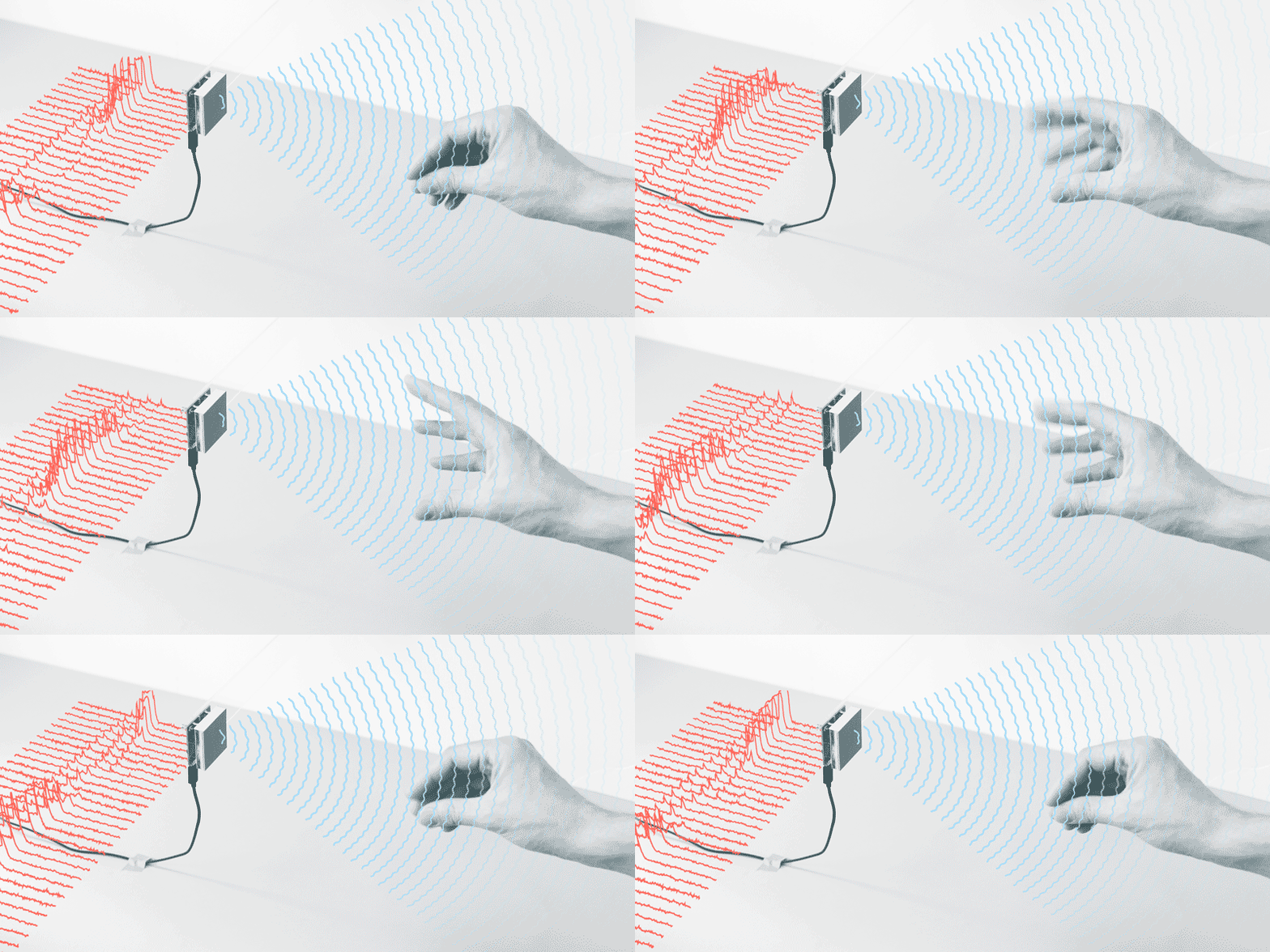
Project Soli, Google ATAP
Project Tango AR:
Project Tango was an early, and eventually unsuccessful, attempt but Google to bring AR to smartphones. The idea of utilising motion tracking, depth perception and area learning to provide AR experiences was ultimately flawed by the use of specialised hardware. Today’s ARKits use hardware already in devices to achieve astonishing results. This shows that some ideas need to be explore but that not all technology that makes a breakthrough will affect our lives and revolutionise the industry.
Nevertheless, this has led to improved consumer AR experiences that promote applications to break out from a single frame and shift the boundaries of this technology. The ability of AR and VR to transport you to different places, tell stories and create greater emotions is fascinating and the opportunities are endless. These technologies are being used to put people in scenarios or stories that alter their perception of reality.
As an iOS user I would like to start learning Swift and ARKit 2 in order to explore the possibilities of AR app development.

ARKit 2, Apple, 2018
Conclusion:
The breadth of new technologies that will effect how we interact with apps, how we consume the information and how they are combined with hardware is truly inspiring. Over the coming modules I would like to explore this connection between software and hardware and the interplay between the two.


 Nathaniel's Creative App Journal